

TL; DR
If you're a confident, capable adult who somehow turns into a sulky teenager, the family peacemaker, or the kid who can't do anything right the minute you walk through your parents' door, you're not imagining it. Families run on roles, and those roles were often set long before any of us had a say. The holidays put everyone back in the same room, with the same dynamics, and our nervous systems remember the old rules. Understanding the role you learned to play and where it came from is the first step to staying more like yourself at the Thanksgiving table. Family therapy can help you see the pattern and choose something different.
Why Do I Turn Into a Different Person Around My Family?
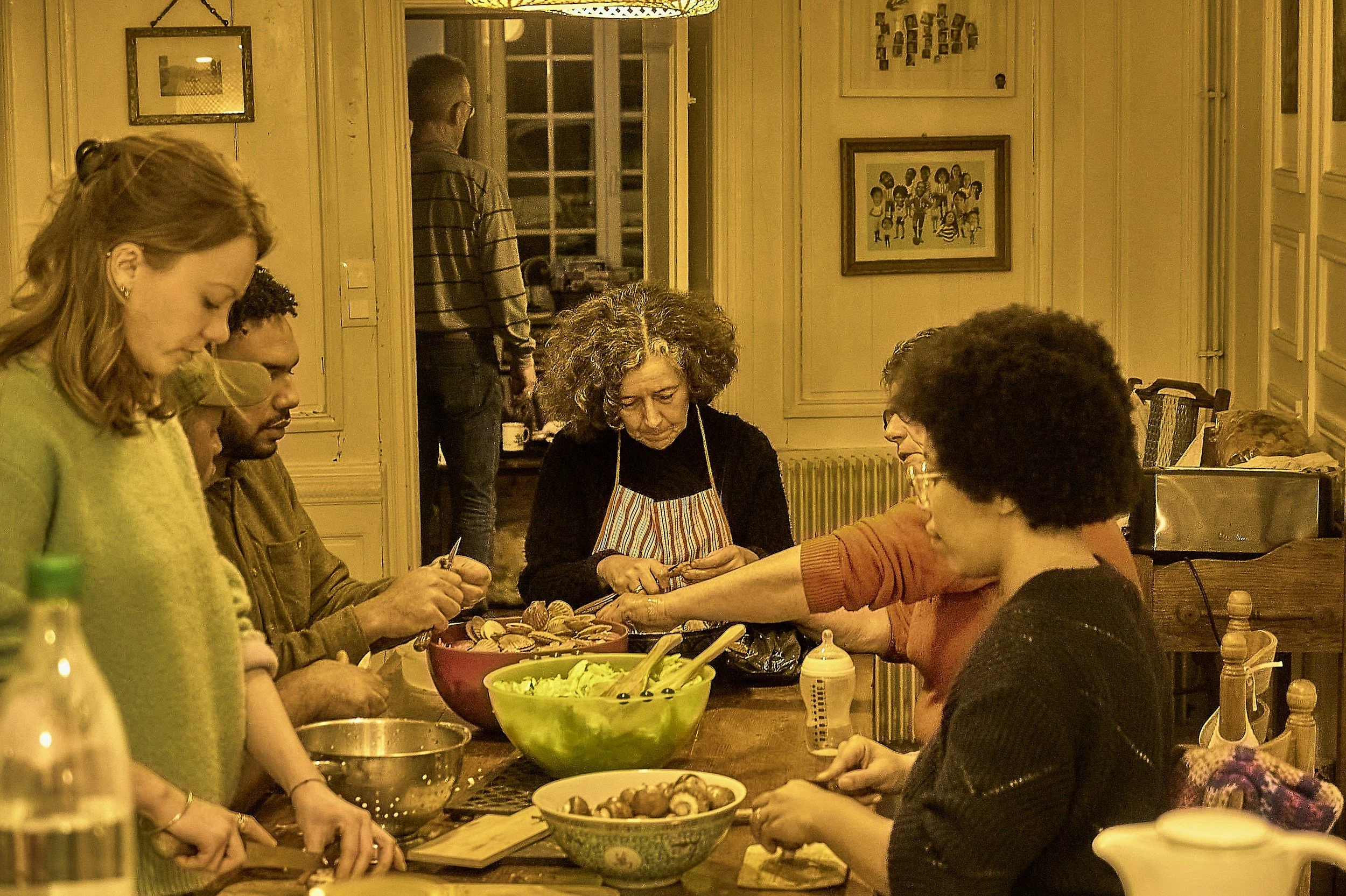
You've been looking forward to seeing everyone. You've got a plan to stay calm. Then within an hour of arriving, someone makes a comment about your job, your partner, your weight, or your parenting, and suddenly you're 15 again. Defensive. Quiet. Over-explaining. Rolling your eyes. Or working overtime to keep the peace.
This is one of the most common things clients bring into sessions at CMC Therapy in late November. Not because they don't love their families, but because going home can pull them right back into a version of themselves they thought they'd outgrown.
Your Nervous System Remembers the Old Rules
Family environments shape how our nervous systems learn to stay safe. If being agreeable kept the peace, or staying invisible kept you out of trouble, your body learned that. Years later, the same voices, smells, and kitchen table can switch that old wiring back on before your adult brain catches up.
What Are Family Roles?
Most families, especially under stress, fall into predictable roles. You might recognize yourself, or someone at your table, in a few of these:
The Peacekeeper: smooths over conflict and manages everyone's moods
The Caretaker: took on adult responsibilities early and still feels responsible for everyone
The Golden Child: carries the family's pride and the pressure to never disappoint
The Scapegoat: gets blamed for tension that isn't really theirs
The Invisible One: learned that having needs was easier when no one noticed them
The Fixer: solves problems so no one has to feel uncomfortable for long
Roles Were Survival Strategies
None of these roles are character flaws. They were creative ways to adapt to what your family needed at the time. The trouble is that a role that once protected you can start to feel like a costume you can't take off, especially when everyone else at the table still expects you to wear it.
Where Do Generational Patterns Come In?
Family roles don't start with you. Your parents learned their patterns from their parents, who learned them from theirs. Ways of handling conflict, expressing (or hiding) emotion, and showing love often get passed down without anyone deciding to pass them down. That's what we mean by generational trauma and generational patterns: not blame, but inheritance.
Recognizing that a pattern is bigger than you can be a relief. It means the tension at Thanksgiving isn't proof that you're failing. It's evidence of something that's been moving through your family for a long time, and something you can choose to do differently.
Signs You're Slipping Into an Old Family Role

You feel an urge to explain, defend, or justify your choices
You go quiet and count the minutes until you can leave
You find yourself managing everyone else's feelings and ignoring your own
An offhand comment ruins your whole day
You leave feeling drained, ashamed, or like a stranger to yourself
Your partner says, “You're different around your family”
If several of these sound familiar, that's not a failure. It's information about where your nervous system is still bracing.
How Do Old Family Roles Affect Your Relationships Now?
The roles we learned at home don't stay at home. The peacekeeper may struggle to bring up hurt feelings with a partner. The caretaker may end up carrying the emotional labor in the relationship. The invisible one may find it hard to ask for what they need at all.
When Your Partner Sees a Version of You They Don't Recognize
Holiday visits can be confusing for partners, too. They may watch you shrink, snap, or disappear into the kitchen and wonder where the person they know went. If holiday plans are already a source of tension between you, our post on how couples can plan the holidays without fighting may help.
Six Ways to Stay Yourself at the Thanksgiving Table
Notice the Shift Without Judging It
The goal isn't to never slip into an old role. It's to notice when it happens. A quiet “there it is” in your head can create just enough space to choose your next move.
Ground Yourself Before You Walk In
Take a few slow breaths in the car. Feel your feet on the ground. Remind yourself of who you are now, your age, your life, your choices. Arriving regulated makes it much easier to stay that way.
Decide Ahead of Time What You Won't Do
Maybe this year you won't referee your siblings, defend your career choices, or do every dish by yourself. Picking one or two things to let go of is more realistic than trying to change everything at once.
Have a Reset Spot
A walk around the block, a few minutes on the porch, a bathroom break with some deep breaths. Stepping away isn't rude. It's how you keep from reacting in ways you'll regret.
Lower the Expectation That They'll Change
One of the hardest and most freeing shifts is accepting that your family may show up exactly the way they always have. You can't control their role. You can choose yours.
Debrief Afterward
Talk it through with your partner, a trusted friend, or your therapist. Naming what came up helps your nervous system file the experience away instead of carrying it into the rest of the season. If you're also grieving someone at this year's table, our post on holiday grief and loneliness may help too.
You Don't Have to Play the Part: A Florida Family Therapist's Final Thoughts

You are allowed to love your family and still not want to be the version of yourself you were at 15. You're allowed to show up with more boundaries, more calm, and more of your adult self, even if it takes everyone a little time to adjust.
Changing a family pattern doesn't happen in one holiday. But every time you notice the old role and choose something a little different, you're doing the work of breaking a cycle, for yourself and for the generations after you.
Ready to Break Old Family Patterns? Family Therapy in Davie, FL, Can Help
If going home for the holidays leaves you feeling drained, resentful, or like a stranger to yourself, you don't have to keep navigating it alone. At CMC Therapy, we help individuals and families understand the roles they learned, where those patterns came from, and how to show up differently. Family therapy in Davie, FL, offers a space to untangle old dynamics with compassion, whether you come in on your own or with the people you love.
You've already taken a meaningful step just by being here. Whether you're ready to begin counseling or simply want to explore if we're the right fit, we're here with warmth, clarity, and zero pressure.
Start your journey by booking a free 15-minute consultation
Meet with Jordyn Brazer, RMFTI, a family therapist in Davie, FL, who understands how complicated going home can be
Begin showing up to the holidays as the person you are now
Other Services Offered by CMC Therapy in Davie and Online Throughout Florida
Understanding family roles and generational patterns is a meaningful part of your healing journey, and it's often connected to other areas of your life. At CMC Therapy, we offer support through the many seasons and struggles you might face, whether you're working through anxiety, relationship challenges, family conflict, life transitions, or the weight of long-standing patterns. Our goal is to provide a warm, welcoming space to help you move forward with clarity and compassion.
Alongside family therapy, we provide a range of therapy services for individuals, couples, families, and anyone seeking flexible virtual therapy in Florida. Our experienced therapists specialize in helping with depression, grief and loss, fear and stress, trauma, EMDR, generational trauma, parenting struggles, major life transitions, and relationship concerns. No matter what you're going through, you'll find a safe space here to feel heard, understood, and genuinely supported.
Change isn't always easy, but you don't have to do it alone. At CMC Therapy, we're here to help you find healing and meaning, so you can move forward with more confidence, comfort, and a sense of belonging. Get in touch today, explore our blog, or follow us on Instagram for insight and support.
About the Author
Jordyn Brazer, RMFTI, is an associate clinician and Intern Development Coordinator at CMC Therapy, and a Registered Marriage and Family Therapist Intern practicing under clinical supervision toward full Florida licensure. She works with young adults and adults on anxiety, identity and self-esteem, emotional processing, and the intergenerational patterns and family dynamics that shape how we move through the world. Drawing from narrative, experiential, and solution-focused therapies, Jordyn offers a warm, genuine space where clients can understand their family stories and begin to see themselves in new ways.